+201288140155
info@unlockegypttours.com
Login
Login
Do not have an account?
Create an Account
Login

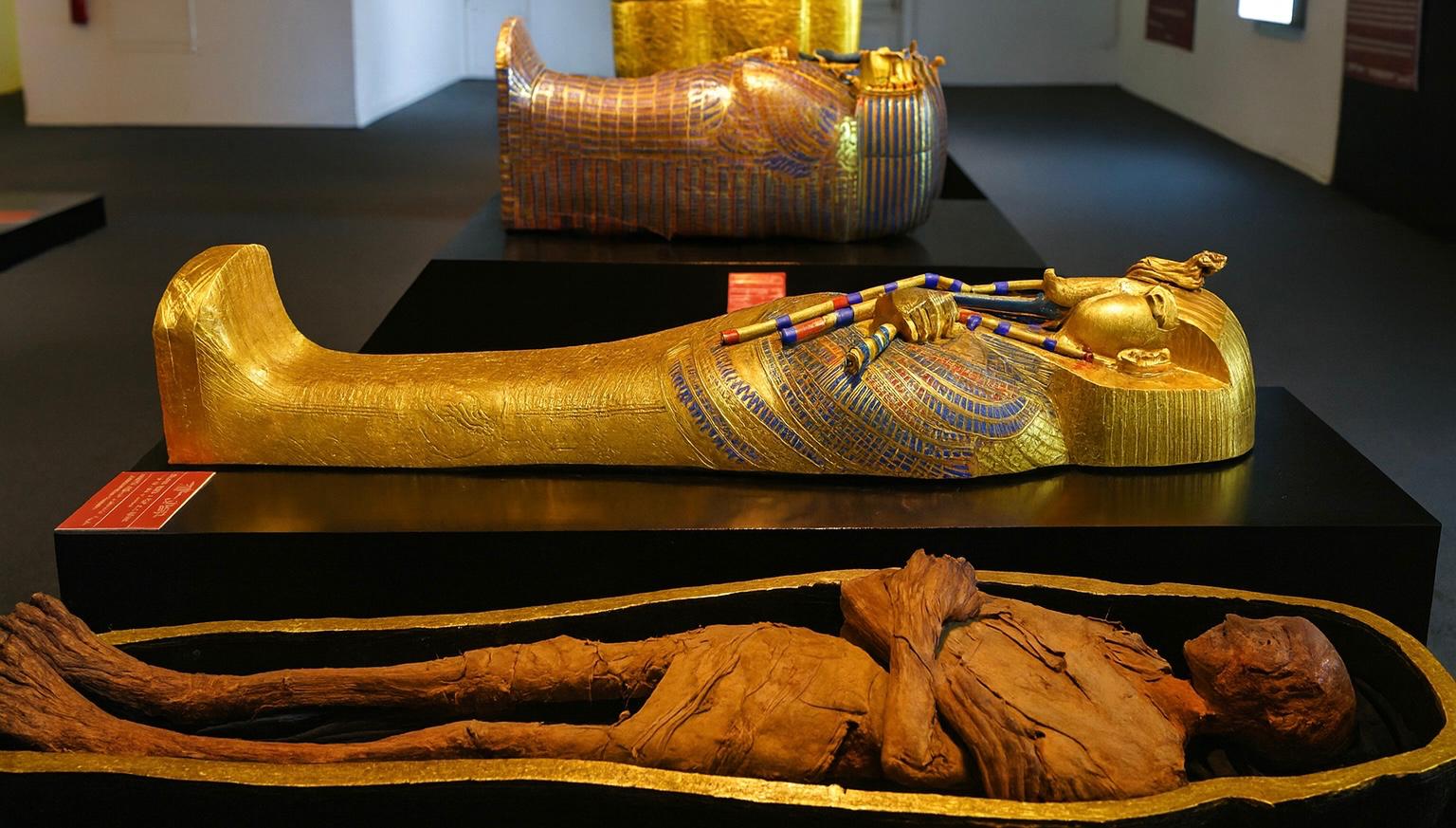
The Luxor Museum and Mummification Museum Tour is the ideal way to experience ancient Egypt’s masterpieces at a relaxed pace and in climate-controlled comfort. While Luxor’s temples and tombs are legendary, the museums provide the perfect context: beautifully lit galleries, carefully curated labels, and close-up views of artifacts that span thousands of years. With an expert guide, the Luxor Museum and Mummification Museum Tour turns raw curiosity into clear understanding.
Your tour starts at the Luxor Museum on the Nile Corniche. Smaller than Cairo’s Grand Egyptian Museum, it offers a focused collection where quality outweighs quantity. Inside, you’ll find royal statues from Thebes’ golden age, objects from the temples of Karnak and Luxor, and exquisite pieces recovered from the cache at Luxor Temple. Highlights often include statues of Amenhotep III, Thutmose III, and Hatshepsut, each displayed with lighting that reveals the crisp chiseling of diorite and granite. A walk through these galleries shows how royal portraiture evolved and how artisans used materials to express divine power.
In addition to sculpture, the Luxor Museum houses delicate objects such as jewelry, ritual items, and pieces from daily life. Short, readable labels help you understand context: where an object was found, which king commissioned it, and how it relates to the wider story of Thebes. Your guide will connect museum pieces with the monuments you see outdoors—so the Luxor Museum and Mummification Museum Tour becomes a bridge between sites and stories.
Next, you continue to the Mummification Museum, a compact yet fascinating space dedicated to the science and belief behind ancient embalming. Here you’ll see instruments used by priests, canopic jars that guarded the organs of the deceased, amulets placed among linen wrappings, and the famous mummified animals that reveal how sacred creatures were honored. Exhibits explain the steps of mummification—from evisceration and dehydration with natron to wrapping and final rituals—showing how Egyptians prepared for eternity.
What sets the Mummification Museum apart is clarity. Diagrams, tools, and actual specimens demonstrate each stage, while your guide answers common questions: Why were certain organs removed yet the heart retained? What oils and resins were used? How did beliefs about the afterlife shape this practice? By the end, the Luxor Museum and Mummification Museum Tour gives you both the “what” and the “why,” connecting spiritual goals with technical mastery.
Whether you’re a first-time visitor or returning Egypt-lover, these museums offer insight that elevates your entire stay. You’ll leave with sharper eyes for reliefs and statues, and a deeper appreciation for the craftsmanship, theology, and medical know-how that sustained one of history’s greatest civilizations.
– Pick-Up:
Meet your guide at your hotel or cruise ship in Luxor. Transfer in a private, air-conditioned vehicle to the first stop of the Luxor Museum and Mummification Museum Tour.
– Luxor Museum Visit:
Explore the galleries with your Egyptologist guide. See royal statues, ritual objects, and artifacts discovered in Thebes. Learn how styles changed from the Middle Kingdom to the New Kingdom and into later periods.
– Transfer to Mummification Museum:
A short ride along the Corniche brings you to the second part of the Luxor Museum and Mummification Museum Tour.
– Mummification Museum Visit:
View embalming tools, canopic jars, funerary amulets, and animal mummies. Your guide explains each stage of the process and the beliefs behind it.
– Optional Coffee/Shopping Stop:
If you wish, stop briefly for coffee on the Corniche or a quick visit to a reputable artisan shop.
– Drop-Off:
Return to your hotel or cruise in comfort. Total touring time for the Luxor Museum and Mummification Museum Tour is typically 3–4 hours, flexible by request.
A1: About 3–4 hours including transfers and guided visits.
A2: Yes. The displays are clear and engaging; guides adapt explanations for families.
A3: Yes, both museums are climate-controlled for comfort and artifact conservation.
A4: Photography rules may vary; non-flash photos are usually allowed in many sections. Your guide will advise.
A5: It adds context to the temples and tombs you see outdoors, explaining craftsmanship, religion, and the science of embalming in an easy, focused visit.
| Adults Numbers | Price/Person |
|---|---|
| Single | 65 $ |
| 2 | 50 $ |
| 3 – 5 | 45 $ |
| 6 – 50 | 40 $ |


