+201288140155
info@unlockegypttours.com
Login
Login
Do not have an account?
Create an Account
Login

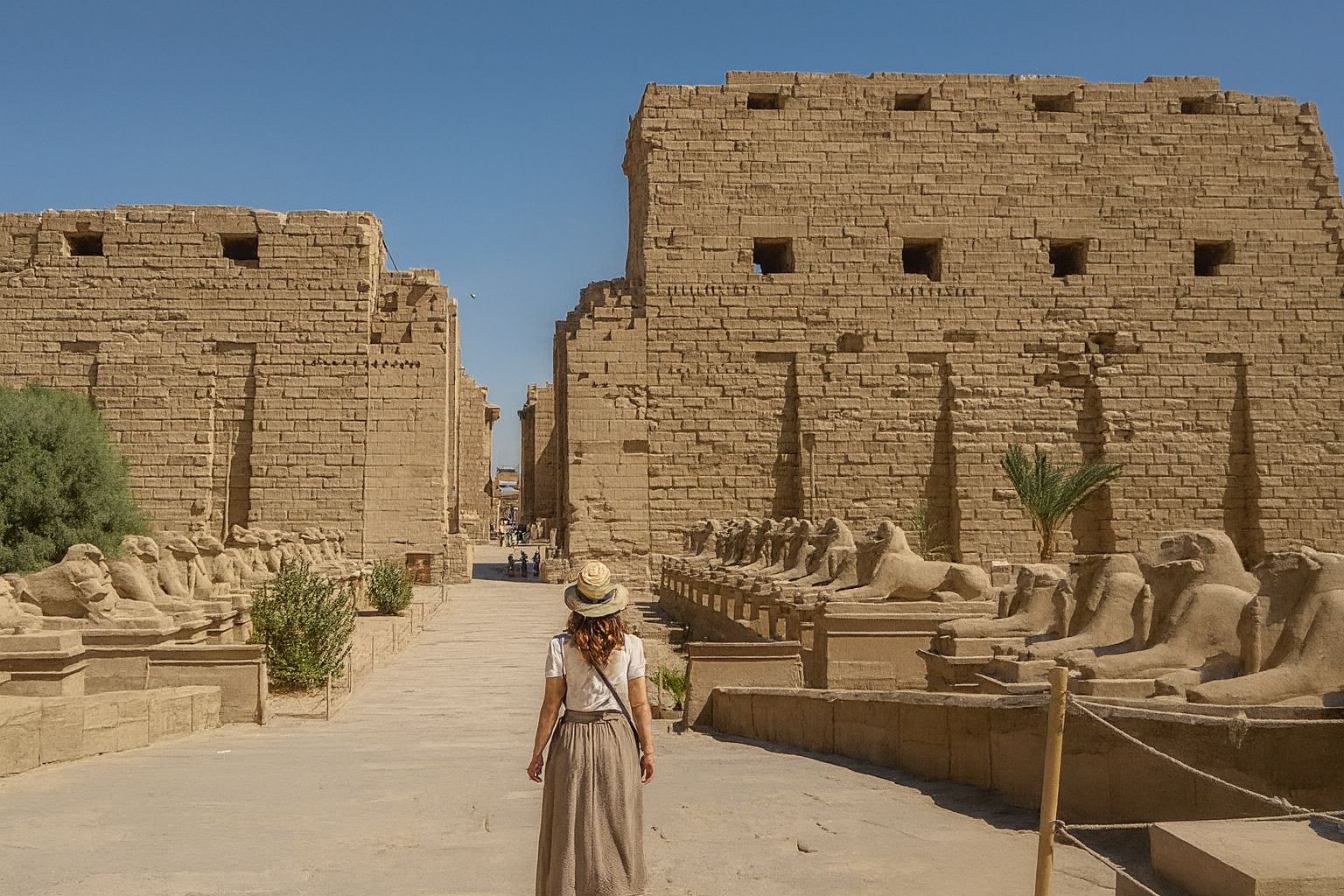
East Bank of Luxor Tour is the essential introduction to ancient Thebes, presenting a seamless journey through two of Egypt’s most iconic sanctuaries—Karnak Temple and Luxor Temple. Curated and led by a private Luxor guide, this experience blends expert storytelling with clear logistics, making it ideal for first-time visitors and repeat travelers who crave depth. You will examine monumental pylons, the Great Hypostyle Hall, sacred lakes, elegant colonnades, and royal courts—each space revealing how pharaohs expressed power, piety, and identity along the Nile. Because this is a private format within our portfolio of Egypt private tours, the pacing, emphasis, and photo stops adapt to your interests—architecture, royal propaganda, relief-reading, or the perfect composition at sunset.
The route of the East Bank of Luxor Tour is straightforward but richly layered. We begin at Karnak, the largest religious complex of the ancient world, where the Temple of Amun grew across two millennia under the patronage of dozens of kings. Here, your private Luxor guide introduces the Theban landscape and the Theban triad—Amun, Mut, and Khonsu—while demonstrating how offerings, processions, and festivals animated this urban-sacred network. In the famed Great Hypostyle Hall, 134 columns create a forest of stone; we discuss the engineering of architraves, the language of column capitals, and the historical dialogue between Seti I and Ramses II. Nearby stands the Obelisk of Hatshepsut, a needle of pink granite whose inscriptions encapsulate royal devotion and ambition. These features make the East Bank one of the most rewarding Nile Valley attractions for anyone interested in sacred architecture and political theology.
From Karnak, we trace the concept of movement along the ancient processional road—the Avenue of Sphinxes—which historically linked Karnak with Luxor Temple, the ceremonial heart of kingship renewal. This connective tissue is crucial: the East Bank temples were not isolated monuments but participants in a civic-ritual choreography, culminating during the Opet Festival when the god’s barque progressed south to Luxor. Understanding this procession enriches your time at Luxor Temple, where we read the royal birth scenes of Amenhotep III, analyze the colossal statues of Ramses II, and appreciate how the sanctuary’s calm geometry contrasts with the sprawling complexity of Karnak. Many travelers call this balance the hallmark of a well-crafted Luxor day tour.
Photography on the East Bank of Luxor Tour can be extraordinary. Early mornings at Karnak offer soft light skimming papyrus-bundle capitals; late afternoons warm Luxor Temple’s sandstone to amber. If your schedule permits, the blue hour around dusk creates dramatic silhouettes for pylons and obelisks. Your private Luxor guide will suggest vantage points—oblique angles across colonnades, low perspectives beneath architraves, or symmetrical frames in forecourts—that elevate your compositions beyond snapshots. For guests building a broader itinerary of Egypt private tours, this East Bank experience pairs naturally with West Bank highlights (Valley of the Kings, Hatshepsut’s Temple, Medinet Habu) and a gentle felucca glide, ensuring you encounter both sides of Thebes.
Practical details remain simple and flexible. Hotel or Nile-cruise pickup and drop-off are included; comfortable, air-conditioned transport keeps transitions smooth even on warm days. We exclude temple tickets in this listing by design, giving you freedom to purchase on-site or ask us to pre-arrange entry. The tour operates year-round with morning and afternoon options; many guests favor a later start to catch Luxor Temple near sunset. Language support is available by request—English, Italian, French, German, Spanish—so your East Bank of Luxor Tour can match your preferred style of interpretation. Accessibility varies across paved and uneven stone surfaces; share mobility considerations in advance and your private Luxor guide will adapt routes and pacing accordingly.
Ultimately, the East Bank of Luxor Tour is about coherence: how architecture, ritual, and landscape interlock along the Nile. By the time we conclude, you won’t just “see” Karnak Temple and Luxor Temple—you’ll understand their conversation across centuries, and you’ll have the context to recognize echoes of Thebes elsewhere on your journey through Egypt. This is why seasoned travelers and photographers often count the East Bank among their favorite Nile Valley attractions and why the combination of Karnak and Luxor remains a timeless anchor for any Luxor day tour.
Your East Bank of Luxor Tour begins with a comfortable pickup from your hotel or Nile cruise. In the vehicle, your private Luxor guide outlines the flow of the day: an in-depth visit to Karnak Temple, a scenic transfer along the Corniche, and an immersive exploration of Luxor Temple. We review essential photography points, restroom locations, shade opportunities, and where to pause for water as needed. The tour is designed to be unhurried and clear, a hallmark of our Egypt private tours.
We approach through monumental pylons into a broad forecourt that sets the architectural scale for the entire East Bank. Over the course of two millennia, rulers expanded the Temple of Amun into a sacred city of pylons, courts, shrines, and chapels. Your guide situates Karnak within the cosmological map of Thebes, home to the Theban triad—Amun, Mut, and Khonsu. This context is essential to appreciating why the East Bank temples functioned as engines of ritual authority and why they remain top Nile Valley attractions.
Inside the legendary Great Hypostyle Hall, 134 colossal papyrus-bundle columns create a cinematic forest of stone. We decode the layout—central nave with higher clerestory windows and side aisles with slightly shorter columns—while discussing engineering techniques, relief carving methods, and color traces that reveal the original polychromy. The hall’s inscriptions record triumphs and offerings, allowing your private Luxor guide to demonstrate how to read cartouches, identify deities, and understand scenes of royal propaganda from Seti I and Ramses II. For many guests, this chamber is the emotional core of the East Bank of Luxor Tour.
From the Hypostyle Hall, we continue toward the towering Obelisk of Hatshepsut. The inscriptions summarise a queen’s devotion and her architectural ambition. We analyze how obelisks functioned as solar emblems and how granite quarrying and transport from Aswan reflected the logistical prowess of the state. Nearby, the sacred lake area prompts a discussion of purification rites, priestly hierarchies, and daily temple routines—an intimate counterpoint to the monumental scale that dominates most Karnak Temple tour images.
Before we exit, we connect Karnak to our next destination through the historical lens of the Avenue of Sphinxes. This processional road once linked Karnak and Luxor Temple physically and symbolically. During the Opet Festival, divine barques traveled along this axis, renewing kingship and affirming the city’s sacred order. Understanding this choreography is key to the East Bank of Luxor Tour, because it reframes the temples as partners in a single ritual narrative rather than isolated monuments.
We travel south along the Nile’s edge, where everyday Luxor life merges with views of sailboats and riverside gardens. This interlude lets you reset your senses and capture candid photographs. Your guide can point out additional Luxor photo spots, cafes for later, and vantage lines where late light sculpts pylons and colonnades—useful if you plan sunset returns or extended Luxor day tour sessions.
Compared to Karnak, Luxor Temple feels intimate and ceremonial, focusing less on vast precincts and more on the refined architecture of courts and colonnades. Built largely by Amenhotep III and extended by Ramses II, its entrance is guarded by colossal statues that set a dignified tone. Inside, we examine relief cycles: the royal birth scenes that legitimize kingship; offerings to Amun that confirm divine favor; and later overlays—especially from the Roman period—that prove sacred spaces continue evolving. This stratigraphy of function and memory makes Luxor Temple a highlight of any East Bank of Luxor Tour.
We also study how the temple’s architecture guides movement. Colonnades act as transitional filters, narrowing the visual field and heightening anticipation before opening into courts and sanctuaries. Your private Luxor guide highlights precise alignments and axial views that create elegant compositions for photographers. As the day advances, sunlight rakes across reliefs, emphasizing chisel marks and modeling figures in low relief—a natural showcase for thoughtful Luxor sightseeing.
If your timing aligns with late afternoon, the golden hour sets Luxor Temple ablaze with warm tones. Many guests plan their Karnak Temple tour in the morning and Luxor Temple tour in the late day, balancing crowds and maximizing light. Blue hour, when the sky deepens and artificial lighting emerges, produces striking contrasts against pylons and obelisks—some of the most evocative images from any Luxor day tour.
To close the loop, we return to the festival connection: the Opet procession, the Avenue of Sphinxes, and ritual renewal. Seeing Luxor Temple after Karnak reaffirms why the East Bank temples must be read together. Your private Luxor guide will draw final lines between iconography, urban topography, and political theology—insights that deepen visits to West Bank sites such as the Valley of the Kings and Hatshepsut’s Temple. In effect, the East Bank of Luxor Tour becomes a foundation for understanding all of Thebes.
We conclude with a relaxed return to your hotel or Nile cruise. If you wish, your guide can help plan a felucca ride, recommend riverfront dining, or time a museum stop. The day’s flow—clarity at Karnak, elegance at Luxor, and the connective avenue between them—delivers a complete, memorable, and photo-rich East Bank of Luxor Tour within the larger tapestry of Egypt private tours.
The East Bank of Luxor Tour usually lasts about 4 hours, covering both Karnak Temple and Luxor Temple. The tour runs comfortably at your own pace, allowing time for exploring, photos, and explanations from your private Luxor guide.
yes entry fees are included
All our tours are completely private. You’ll have a private Egyptologist guide and private air-conditioned transport, giving you flexibility, personalized explanations, and comfort throughout your Luxor day tour.
You can choose morning or afternoon. Morning tours are cooler and perfect for exploring Karnak Temple, while afternoon tours offer warm golden light at Luxor Temple — ideal for photography lovers.
Yes, of course. You can add an optional lunch at a Nile-view restaurant or combine the East Bank temples with other Luxor day tours such as a felucca ride or a visit to the Luxor Museum. Everything can be tailored to your schedule.
| Adults Numbers | Price/Person |
|---|---|
| Single | 85 $ |
| 2 | 65 $ |
| 3 – 5 | 60 $ |
| 6 – 50 | 50 $ |